
YOUR BODY IS TRYING TO TELL YOU SOMETHING
Jungian Therapy for Chronic Illness, Autoimmune Conditions, and Stress-Related Symptoms in Women
YOUR SYMPTOMS FOLLOW A PATTERN
– You push through every week just to get through it. You override the fatigue. You manage the headaches. You keep functioning.
– You don’t have enough sick days to justify resting. So you don’t.
– And then, by the weekend, your body takes over. You’re exhausted. Inflamed. Shut down.
– At night you find yourself doomscrolling, taking a gummy, or having a drink — desperate for just an hour of quiet.
WHEN DOCTORS SAY EVERYTHING IS NORMAL
The doctors have run the tests. They say there’s nothing else to do — or that “there is nothing wrong with you.”
And yet you can see the pattern. The migraines hit at a certain point every week. The stomach flares at predictable times. The 3am wake-up comes like clockwork.
You’ve changed your diet. Taken supplements. Adjusted your sleep. Optimized your workouts. Batch-cooked your weekly meals. What gives?
Your doctor says to reduce stress. Your Oura ring tells you your resting heart rate is too high. But how exactly are you supposed to reduce stress in a life that already feels maxed out?
You’ve tried to communicate better with your doctors. You’ve searched for exactly the right words. You’ve wondered: if you could just explain it more clearly, maybe they would finally listen and take you seriously.
You’ve done everything you’re supposed to do. You are not getting answers.

Let me say this clearly: this is not “in your head.” You are not doing this to yourself. And eating more vegetables is not the answer. The next great habit isn’t going to solve this. Working through the things you haven’t yet been able to address is what will.

WHEN STRESS LIVES IN THE BODY
The mind and body are not separate systems. They coexist on a
very deep level.
Jung wrote that the gods have become diseases. What he meant is this: what we push out of awareness doesn’t disappear. It goes somewhere. And often, it returns through the body.
If you were told to toughen up, calm down, stop crying, or get over it, you likely learned to live from the neck up. Thinking is safer. More predictable. Emotions and sensations feel disruptive. So you moved away from them.
But the longer we ignore or rationalize what we feel, the more it goes underground.
And the unconscious will find a way to speak.
When the Unconscious Speaks Through Symptoms
Many of the women I work with are high-functioning perfectionists. Some carry childhood trauma or complex PTSD. Others find themselves in midlife realizing that the strategies that helped them survive are now exhausting them.
The clients I see, in person and online throughout Ohio, have often been living with symptoms for months or even years before we meet. They’ve tried everything earnestly. They may have had temporary relief. But it always comes back.
I don’t want you to keep suffering while we wait to get started.
when the UNconscious Speaks Through SyMptoms
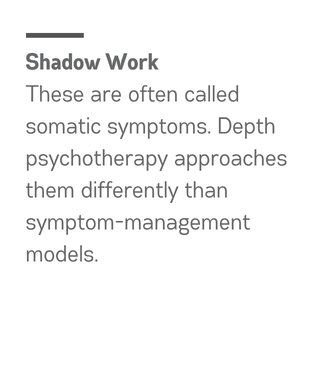
These are often called somatic symptoms. Depth psychotherapy approaches them differently than symptom-management models.
Many of the women I work with are high-functioning perfectionists. Some carry childhood trauma or complex PTSD. Others find themselves in midlife realizing that the strategies that helped them survive are now exhausting them.
The clients I see, in person and online throughout Ohio, have often been living with symptoms for months or even years before we meet. They’ve tried everything earnestly. They may have had temporary relief. But it always comes back.
I don’t want you to keep suffering while we wait to get started.

Who This Is For
As a Jungian analyst in training and board-certified art therapist, I work with women who are ready to move beyond coping and into realignment. This is not quick-fix work. It requires commitment and a genuine desire to deep change, and dig in.
The medical system treats the physical layer. CBT helps manage intensity. EMDR can desensitize trauma responses. Parts work helps you understand yourself. These approaches can help you build insight, and I’m sure you are already insightful and intelligent.
But insight alone may not be giving you the relief you’re actually seeking.
Working with the unconscious is different. It goes deeper than traditional talk therapy to the root cause, where lasting change actually happens. This is not about rehashing your history. It’s about addressing what’s underneath it.
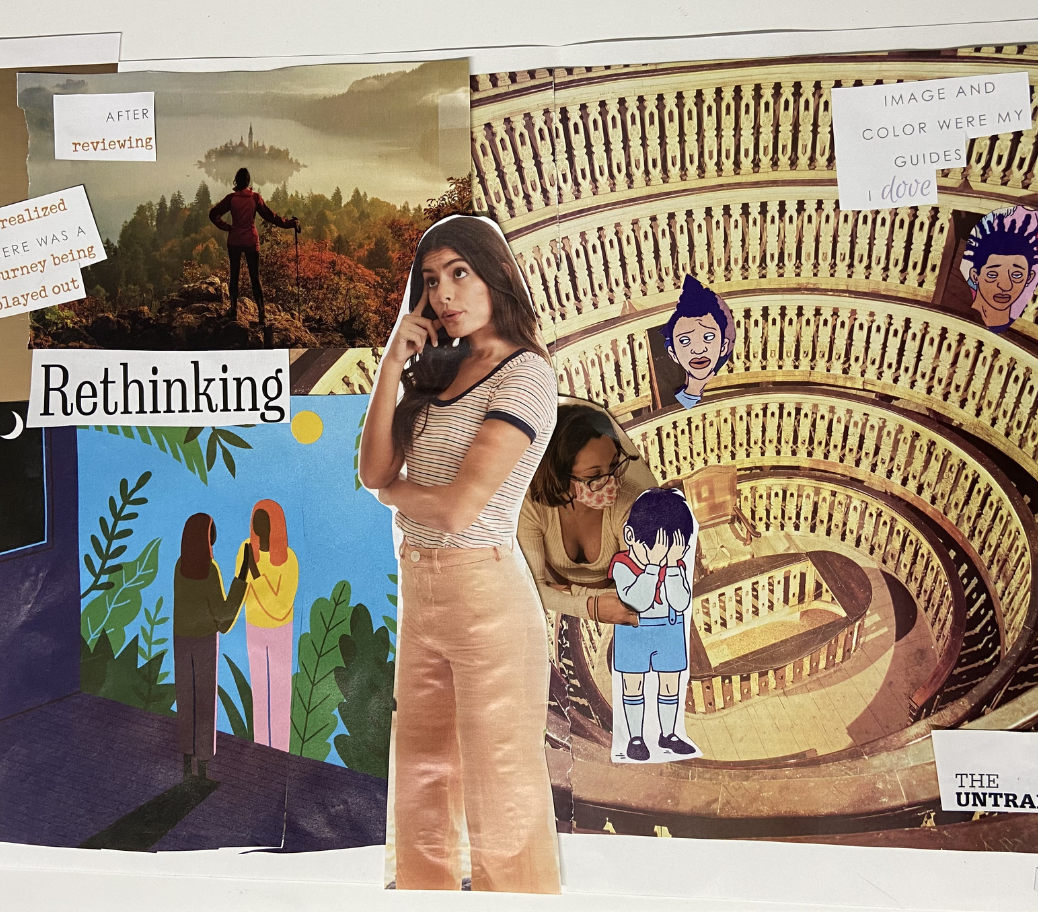
Jungian Work for Somatic Symptoms
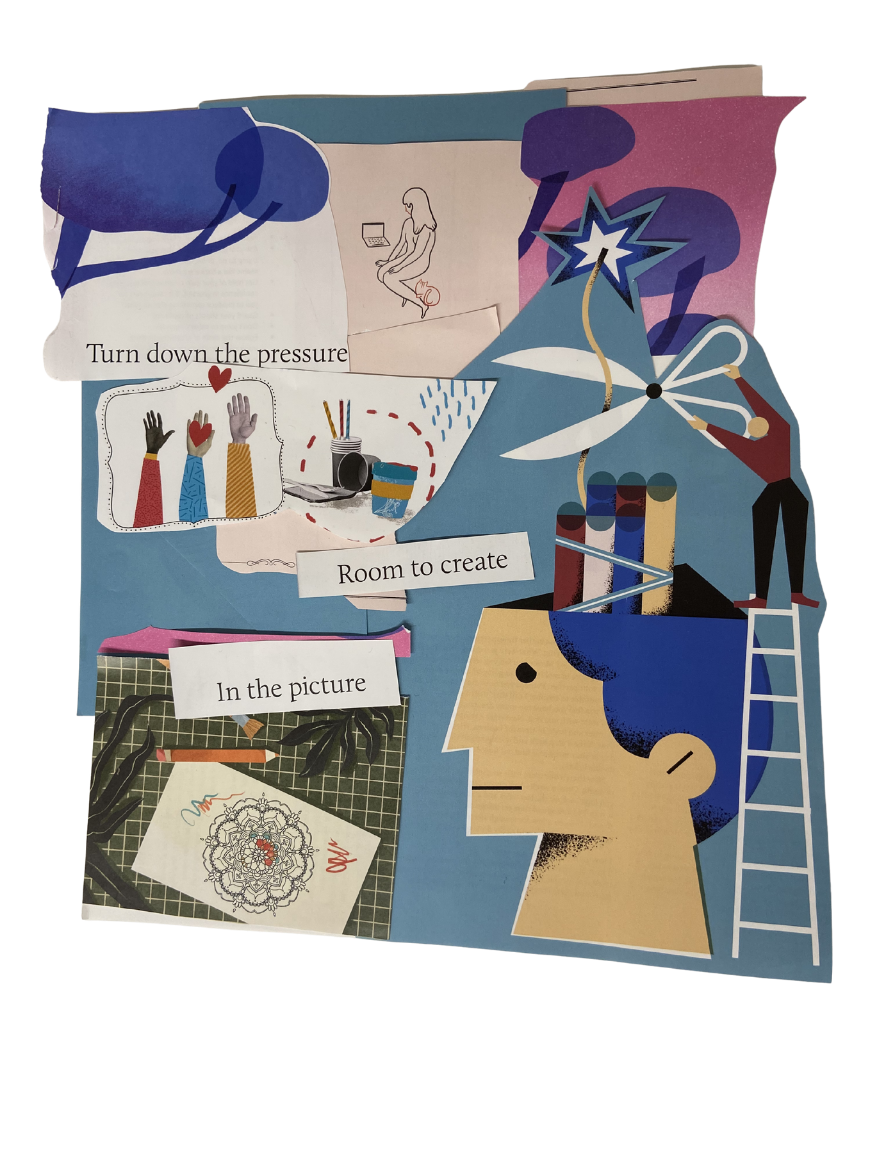
Coping is not the same as transformation.
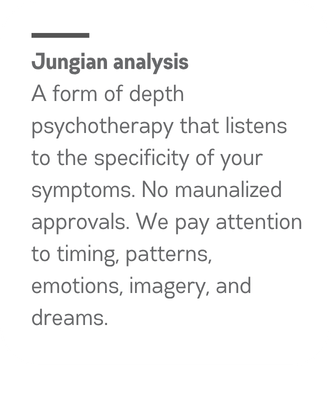
Jungian analysis — a form of depth psychotherapy — listens to the specificity of your symptoms and life patterns. There is no generalized, manualized approach. We pay attention to timing, patterns, emotions, imagery, and dreams. We look at what the psyche may be trying to rebalance.
Over time, you’ll develop the ability to understand the language of your body’s emotions and sensations — not just medicate them or be at odds with them.
This is real shadow work, the way Carl Jung originally conceptualized it. If you’re curious what that actually involves, you can learn more here: Shadow Work in Jungian Analysis.
This work is not about blaming you for your illness. It’s about learning to listen differently.
One thing I often ask: Do you have a sense of your intuition as an inner knowing, even if you’ve stopped trusting it? Many of my clients can’t differentiate between anxiety and intuition when they start working with me.
Do you have a spiritual life or practice, however you define that? If so, that is something we can work with directly. These parts of you are often the first to go quiet when chronic illness takes hold. Learning to hear them again is part of how we reconnect the whole.
How Art Therapy Engages the Emotional Brain
For many people living with chronic illness, certain parts of themselves have gone quiet — disconnected, like something that used to be plugged in no longer is. The mind and body have stopped communicating the way they used to.
Art therapy is one of the ways we restore that connection.
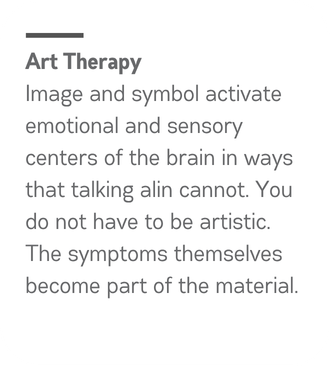
Image and symbol activate emotional and sensory centers of the brain in ways that talking alone cannot. Art therapy allows us to access material that may not yet have words.
You do not have to be artistic. You do not have to remember your dreams. The symptoms themselves become part of the material. Read more about art therapy here.
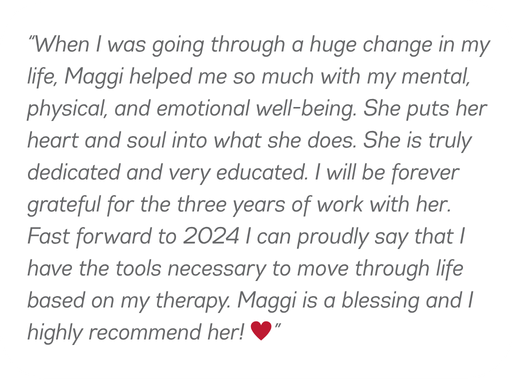
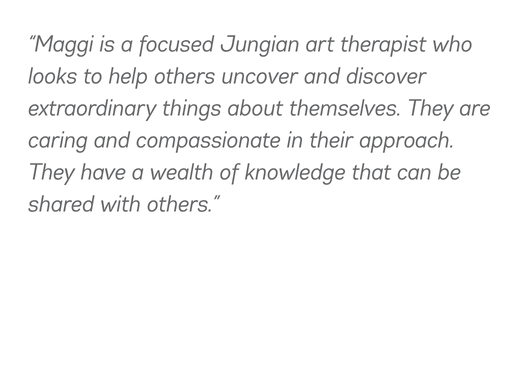
Here’s What People Are Saying
GETTING STARTED IS EASY
1. Book a Consultation
We’ll chat about what you’re hoping for and whether we are a fit to work together.
2. Schedule Online
We’ll chat about what you’re hoping for and whether we are a fit to work together.
3. Find Yourself
Cross the threshold to knowing yourself deeper so you can finally feel whole.
you may be asking...
Frequently Asked Questions
“I’m not an artist!” How does Art Therapy work?
Not a problem. Art therapy is not about getting an “A” or hanging a painting on a gallery wall. It’s about engaging in activities outside of your normal thought process to get in touch with your body, your unconscious, and creative problem-solving.
Anything new is an act of creativity. Art therapy engages your brain to think creatively and helps get those neuropathways firing so that you can find new answers to your challenges.
Two rules I give to adults when we start art therapy:
- There is no wrong way to do this. Life isn’t fill-in-the-blanks or multiple choice. Your creative explorations are the same.
- You don’t have to follow directions. I may give you guidance and suggestions. If you have a different idea or aren’t sure what I mean, that’s okay. As long as you are showing up and noticing, that’s all that matters.
How do I know I need Art Therapy instead of traditional talk therapy?
A few common reasons people choose art therapy:
- You don’t know what to say, or you’ve tried talk therapy and haven’t gotten the results you wanted.
- You like being creative. If you already have a creative outlet, chances are you’d enjoy adding more creativity to your life as part of your self-care.
- You have a difficult relationship with your feelings — either you don’t know what you’re feeling, or you’d rather not have feelings at all. If you find yourself trying to out-think your emotions, art therapy will help.
How long does therapy last?
While insurance companies may want progress in 6 weeks, long-term healing of trauma or childhood issues often takes a couple of years. Much of the work I do is about your well-being, not treating a diagnosis. Depth psychotherapy is a journey of discovery to meet the Self — your soul. It can be about building strengths, self-knowledge, and living authentically.
True healing is a unique process, not a checklist of quick fixes. Consistency is best. In most cases, once a week for 50 minutes is enough to get started.
“I don’t have time for therapy.”
The paradox of therapy is that you have 168 hours in a week but only one of those is in therapy. When therapy becomes part of your weekly routine, it becomes a still point, that acts like a fulcrum you can count on. The rest of your life may feel like chaos, but there is an anchor.
You can also eliminate driving time by using online therapy. Then therapy can be in the privacy and comfort of your own home. You can process and spend time working on you, rather than immediately dealing with traffic.
“I want to wait until things have calmed down.”
When things feel out of control, you need therapy more, not less. It’s like forcing yourself to the gym on a rainy morning when you just don’t want to go, and feeling better afterward even though it was a struggle to get started. Your weekly therapy hour can be the one stable hour in your 168-hour week: the calm in the storm.
Things are okay right now. Do I really need therapy?
Depth therapy and dream pattern analysis are the types of therapy you want when you already have coping skills and may have even been told by another therapist, “Okay, you’re good to go.” If you’re stable but not healed. You’re functioning but you don’t feel whole. This work is for you because you’re ready to rebuild the inner system.
What is Dream Interpretation?
Dream pattern analysis uses dream images to decode unique messages from the unconscious. It can give crucial insight on how to resolve persistent life patterns related to emotions, relationships, thoughts, and behaviors.
“Isn’t therapy expensive?”
Yes, therapy is a significant financial commitment. I have found through my own therapy journey that it was the best investment I ever made in myself. Going into it, I couldn’t imagine how significantly different my life would be on the other side — but it was worth every penny and more.
The fee for a 50-minute session is $225. Longer sessions and intensives are also available.
Learn more about fees and insurance here.
The fee for a 50-minute session is $225. Longer sessions and intensives are also available.
Do you accept insurance?
The State of Ohio does not require insurance companies to cover art therapy. I am an out-of-network provider and you may be able to get reimbursement from some commercial carriers. That is rare and I would not count on it. Paying out of pocket gives you extra privacy as well as is an energetic investment in yourself.
Have other questions?
I’d love to chat with you to see if this work is a fit. Schedule your free 30-minute consultation by visiting the Get Started page.
From Symptom Management to Realignment
Over time, as your inner and outer life realign, the body often shifts too. Not because we forced it, but because it no longer has to carry everything alone.
On the other side of this work is something I would call your personal myth, a life that feels coherent, aligned, and actually yours. Driven by your soul, not your “should’s.”
Jung said that the privilege of a lifetime is to become who you truly are.
“If your body has been trying to get your attention, it’s time to listen.”

Address
In-person sessions provided in Columbus, Ohio:
1550 Old Henderson Road, Suite N-142
Columbus OH, 43220
Online Therapy Virtual Sessions available
Contact Maggi Colwell
Chiron Art Therapy LLC
maggi@chironarttherapy.com
(614) 800-9508